Greener Streets, Better Communities: How Riding an Addmotor E-Trike Helps the Environment

Every spring, Earth Month gives us a chance to reflect on the small daily choices that add up to either a heavier or lighter footprint on this planet. Your commute. Your errands. Your Sunday ride.
You have probably heard about electric cars as a greener alternative to gas vehicles. But there is another option — one that is often overlooked, surprisingly affordable, and in many ways more impactful: the electric trike.
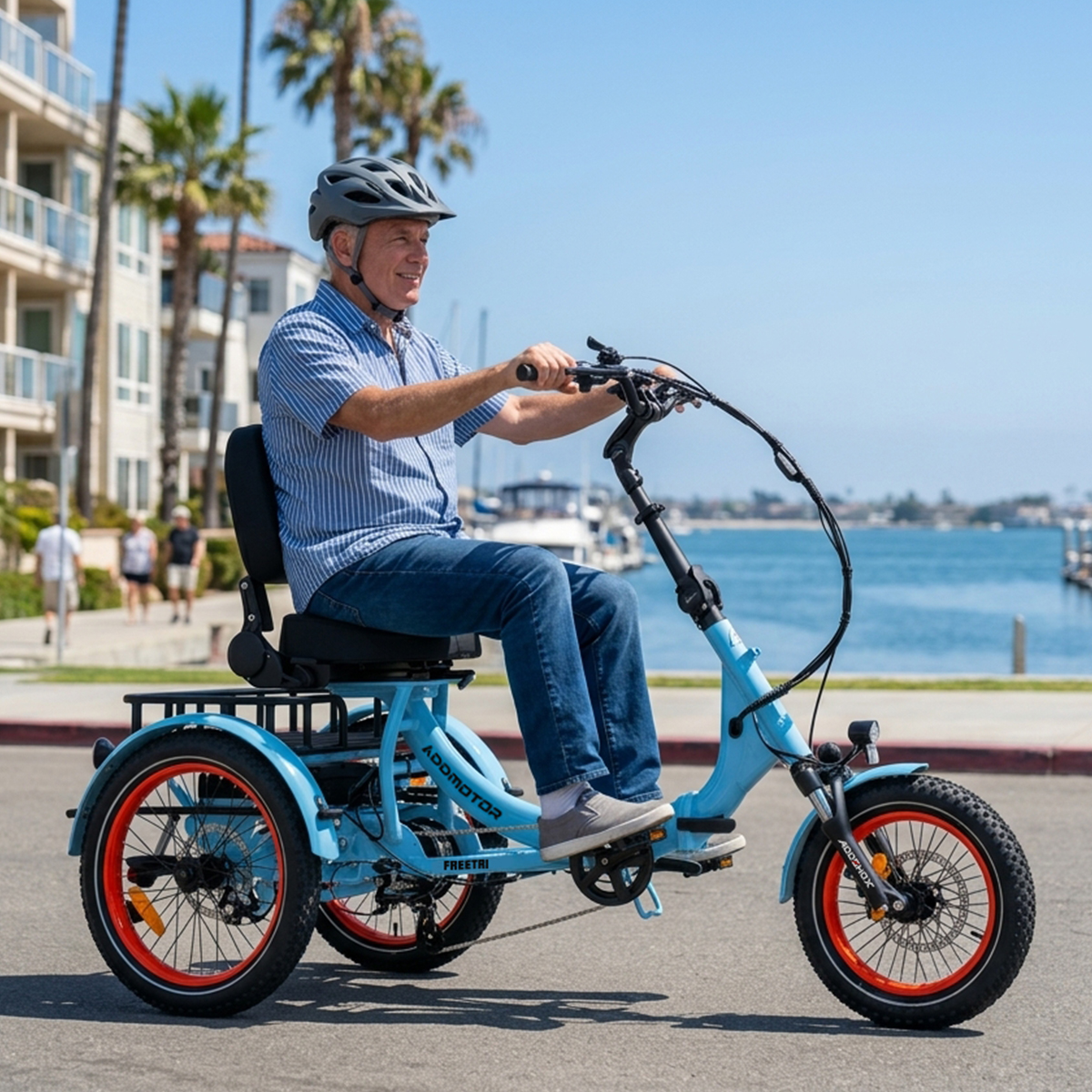
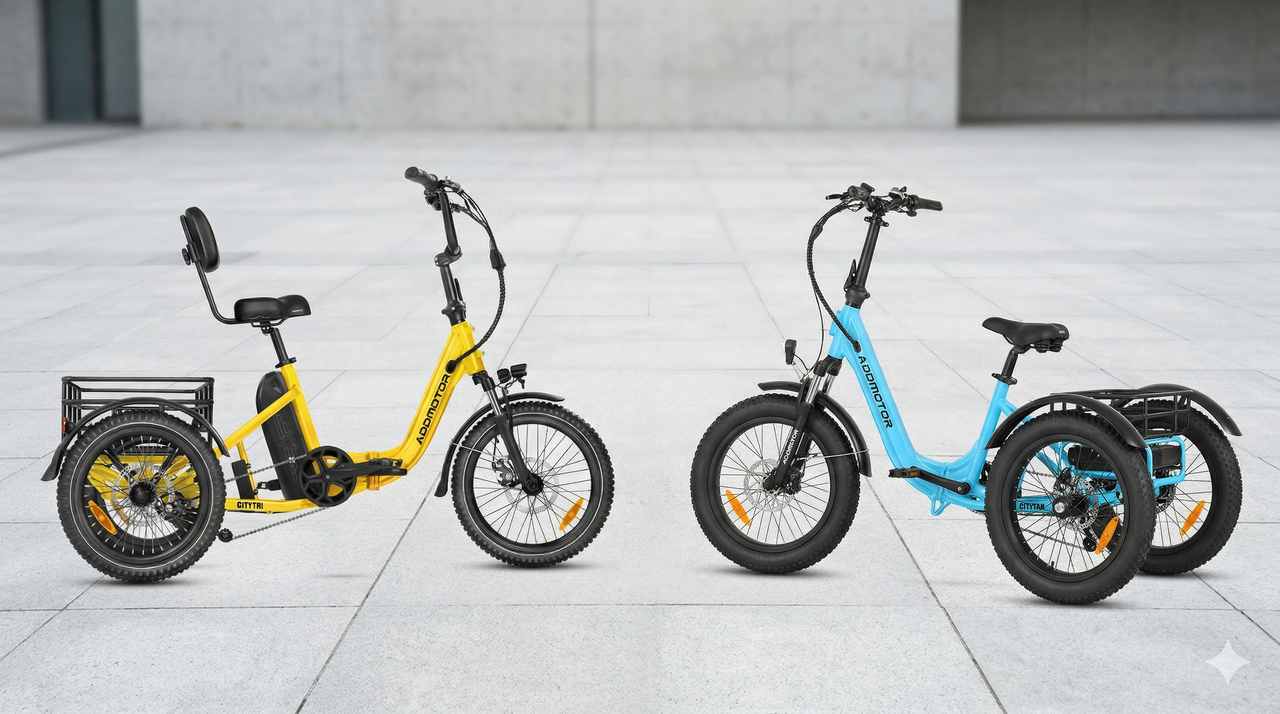
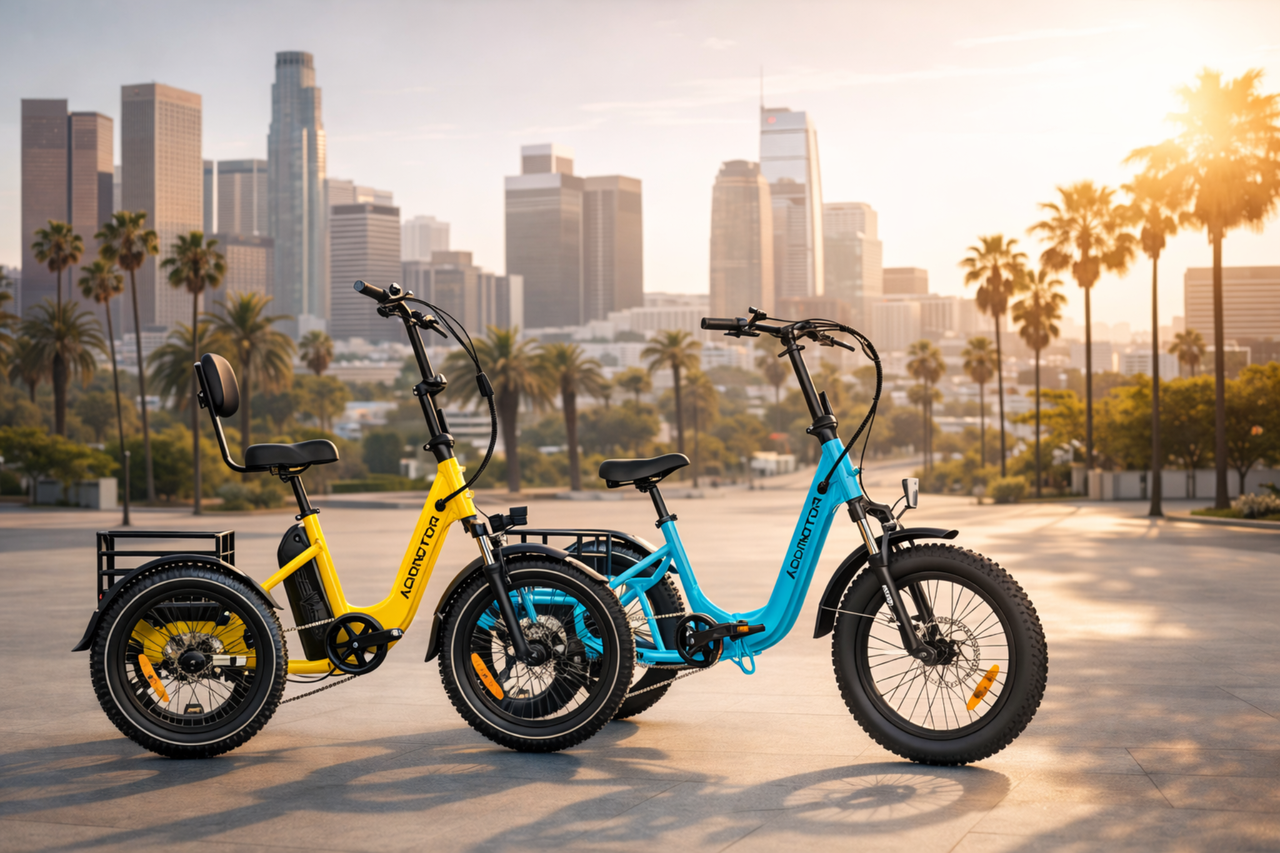
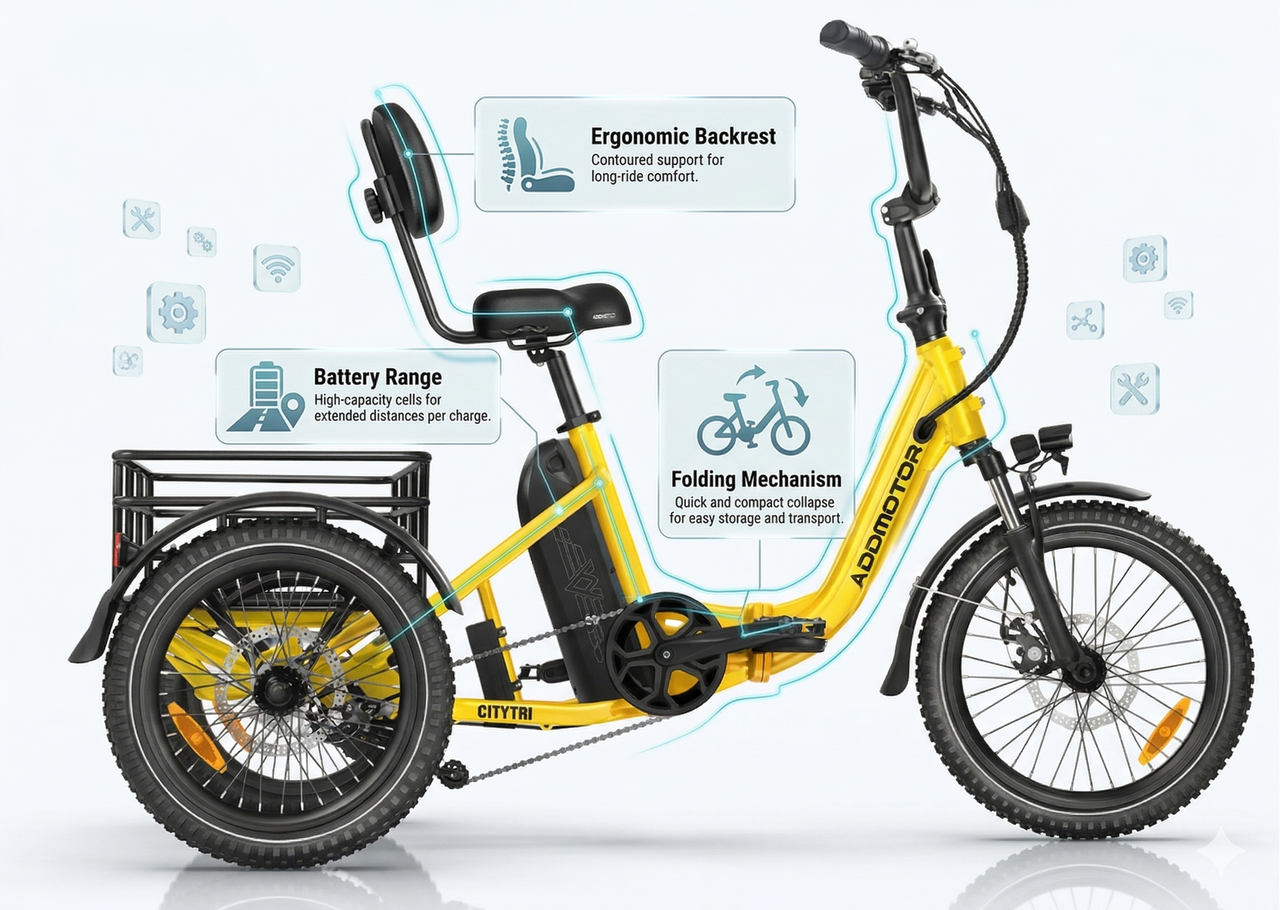
Whether you ride an Citytri E-310 or an Citytan M-315, choosing an e-trike for your short trips is one of the most meaningful individual climate actions you can take. Here is why — and the numbers behind it.
The Carbon Math: How Much Does a Car Actually Emit?
Let us start with the baseline. A typical gas-powered car emits approximately 404 grams of CO2 per mile driven (based on EPA average for 2023 models, including fuel production and tailpipe emissions).
For the average American commute of 15 miles round-trip, 5 days a week, 50 weeks a year:
• Miles driven per year: 3,750
• Annual CO2 emissions: approximately 1.5 metric tons
That is the equivalent of the carbon sequestered by 83 tree seedlings grown for 10 years.
Now consider: how many of those 3,750 miles are truly necessary? How many are short trips — to the grocery store, the post office, the coffee shop — that could easily be made by bicycle?

Studies consistently show that more than 50% of car trips in the U.S. are under 3 miles. These micro-trips are the easiest to replace — and the most wasteful when made by a 4,000 lb vehicle burning gasoline.
The E-Trike Carbon Footprint: How Clean Is It Really?
Electric vehicles — including e-trikes — are not zero-emission. The electricity used to charge the battery has a carbon footprint, depending on how the local grid generates power. But even in the most carbon-intensive U.S. grids (coal-heavy states), the advantage is significant:
E-Trike electricity emissions:
The Citytri E-310 and Citytan M-315 use a 48V 20Ah battery (~0.96 kWh per full charge). Charging from empty to full costs less than $0.15 in electricity in most U.S. states. Annual electricity for a typical commuter (charging 2–3 times per week): ~$8–$20 per year in electricity costs. CO2 emissions per mile (average U.S. grid, 0.386 kg/kWh): approximately 0.015 kg CO2 per mile — about 97% less than a gas car.
_1696751242.jpg)
The grid is getting cleaner every year:
Here is something that electric vehicle owners get that gas car owners do not: their vehicle gets cleaner automatically as the grid decarbonizes. A gas car burned the same amount of gasoline in 2026 as it did in 2010. But an e-trike charged today benefits from every new solar farm and wind turbine that comes online. In states with high renewable penetration (California, New York, Colorado), an e-trike can approach near-zero operational emissions — an advantage that compounds over the lifetime of the vehicle.
Lifecycle Analysis: Manufacturing vs. Driving Emissions
Critics of electric vehicles sometimes point to manufacturing emissions — the carbon footprint of building the battery, motor, and frame — as a reason to prefer gas vehicles. This argument has some validity, but it is often overstated. Here is the full picture:
Manufacturing emissions:
Battery manufacturing does generate significant CO2 — approximately 50–100 kg of CO2 per kWh of battery capacity. For the Citytri E-310/Citytan M-315's 48V 20Ah/13.5Ah battery (~1 kWh capacity), that is roughly 50–100 kg CO2 in manufacturing emissions.
The break-even point:
An e-trike uses approximately $0.10–$0.15 of electricity per full charge. Even at 3 charges per week, annual electricity cost is under $25 — and annual CO2 emissions are under 60 kg. Compare that to a gas car driving 3,750 miles/year: ~1.5 metric tons (1,500 kg) of CO2 annually.
| Annual Metric (3,750 miles) | Gas-Powered Car | Addmotor E-Trike |
|---|---|---|
| Fuel/Electricity Cost | ~$400 - $600+ | Under $25 |
| CO2 Emissions | ~1,500 kg | Under 60 kg |
| Annual Carbon Savings | - | ~1,440 kg CO2 |
Annual savings: ~1,440 kg CO2. The manufacturing emissions of the battery are paid back in less than 2 months of typical use. Over a 5-year lifespan, an e-trike saves approximately 7 metric tons of CO2 compared to a gas car making the same trips.
Beyond CO2: The Other Environmental Benefits
Carbon emissions are not the only environmental metric. E-trikes offer additional ecological advantages:
Zero tailpipe pollutants:
Gas vehicles emit nitrogen oxides (NOx), particulate matter (PM2.5), and volatile organic compounds (VOCs) — all of which contribute to respiratory illness, smog, and poor air quality, especially in urban areas. E-trikes produce zero tailpipe emissions. Switching from car trips to e-trike trips directly improves local air quality, particularly in neighborhoods near high-traffic corridors.
The health impact is especially significant for children, the elderly, and people with respiratory conditions who live near busy roads.
Zero oil use:
The average car requires 4–6 quarts of oil and an oil change every 5,000 miles — roughly 4–6 oil changes per year. Over 5 years, that is 20–30 quarts of motor oil, most of which ends up as hazardous waste. E-trikes have no engine oil, no transmission fluid, and no petroleum-based lubricants (beyond minimal drivetrain grease).
Reduced road wear:
Heavier vehicles cause disproportionately more road damage. A 4,000-lb car causes roughly 4,000x more road wear per mile than a 70-lb bicycle. Every trip made by e-trike instead of car reduces road maintenance costs for the community — and extends the lifespan of public infrastructure.
Lower noise pollution:
Gas cars and motorcycles create significant noise pollution in urban environments. Electric trikes are whisper-quiet, contributing to calmer, more livable neighborhoods — especially in dense residential areas.
Making the Switch: Practical Tips for Reducing Your Car Miles
You do not have to sell your car to make a difference. Even replacing 20–30% of your car trips with e-trike rides generates meaningful impact:
Low-hanging fruit — trips easily replaced by e-trike:
- Grocery shopping (most trips under 3 miles)
- Coffee shop or cafe runs
- Post office and bank visits
- Neighbor or friend visits within 5 miles
- Park and outdoor recreation trips
- Farmers market visits
- Short commute legs (e.g., to a train station)
The multi-modal approach:
Many e-trike riders use a hybrid approach: they drive to a commuter rail station, fold their Addmotor trike, store it on the train, and ride from the destination station to their office. This 'first-mile/last-mile' use case is one of the most impactful applications of e-trikes.
E-trike vs. e-bike vs. traditional bike:
For trips under 3 miles on flat terrain, a traditional bicycle is the lowest-emission option. For longer distances, hilly terrain, or carrying cargo, an e-trike becomes the practical choice — and still far outperforms a car.
The Citytri E-310 and Citytan M-315: Built for Cleaner Commutes
The Addmotor Citytri E-310 and Citytan M-315 are purpose-built for replacing car trips:
- 750W motor: powerful enough to handle hills, headwinds, and cargo without requiring a car
- 48V 20Ah、13.5Ah battery (50-85+ miles range): most riders will only need to charge 2–3 times per week — under $10 in annual electricity
- Folding design: fits on public transit, in car trunks, and in apartments — enabling the multi-modal approach
- Rear cargo rack or basket: carry groceries, packages, and everyday items without a car
- Full LED lighting: safe for evening rides, extending your usable hours
The Bigger Picture: Why Individual Choices Matter
It is easy to feel that individual actions do not matter when facing a global climate crisis. But the aggregate effect of millions of people making different choices is precisely how systemic change begins. Every e-trike on the road is: One less car in traffic (reducing congestion for everyone); One less parking space needed; One more person voting with their wallet for a clean transportation future; One more person building the habit of low-carbon living.
And the health co-benefits — cleaner air, quieter streets, more physical activity — make the transition personally rewarding, not just environmentally necessary.
Earth Month Challenge: 10 E-Trike Trips This April
This Earth Month, challenge yourself to make at least 10 trips by e-trike that you would normally have made by car. Not sure where to start? Try these:
- 1. Your next grocery run
- 2. The coffee shop on the corner
- 3. A friend's house within 5 miles
- 4. Your local park for a weekend ride
- 5. The farmers market
- 6. Your post office or library
- 7. A restaurant within 3 miles for dinner
- 8. A neighbor's house for a visit
- 9. Your nearest transit station
- 10. An outdoor coffee shop on a sunny morning
Track your trips in a notebook or app. At the end of April, calculate how many miles and how much CO2 you saved. Share it with friends and family. Small actions, multiplied, matter.
The Road Ahead
Transportation accounts for approximately 29% of U.S. greenhouse gas emissions — more than any other sector. And the vast majority of those emissions come from personal vehicles carrying one person on short trips. The e-trike is not a niche solution. It is a direct, scalable, practical answer to one of the biggest sources of carbon emissions in daily life.
Addmotor's mission is to make that choice easy, affordable, and enjoyable — with electric trikes that are built to last, backed by real warranties, and designed for real life. This Earth Month, make the switch. Your lungs, your wallet, and the planet will thank you.
- Shop the Addmotor Citytri E-310 Folding E-Trike: www.addmotor.com/products/citytri
- Shop the Addmotor Citytan M-315 Full Suspension E-Trike: www.addmotor.com/products/citytan