Family & Commercial Transport — Electric Cargo Trike: Addmotor Greattan D
Abstract
Electric cargo tricycles have rapidly become one of the most transformative solutions in modern mobility. Offering a rare combination of stability, hauling capability, and zero-emission performance, the electric cargo trike is reshaping how families, delivery riders, and small businesses navigate urban and rural environments.
Contents
- Introduction: The Rise of Electric Cargo Tricycles
- Advantages Over Two-Wheel Alternatives
- Addmotor Greattan D: Premium Features & Specs
- Real-World Benefits for Key User Groups
- Comparison to Competing Options
- Pros and Cons of Electric Cargo Trikes
- Buyer’s Guide: Choosing Your Trike
- Recommended Electric Cargo Bikes: Addmotor GRAOOPRO & Garootan M‑81
- Conclusion: Redefining Sustainable Mobility
Introduction: The Rise of Electric Cargo Tricycles
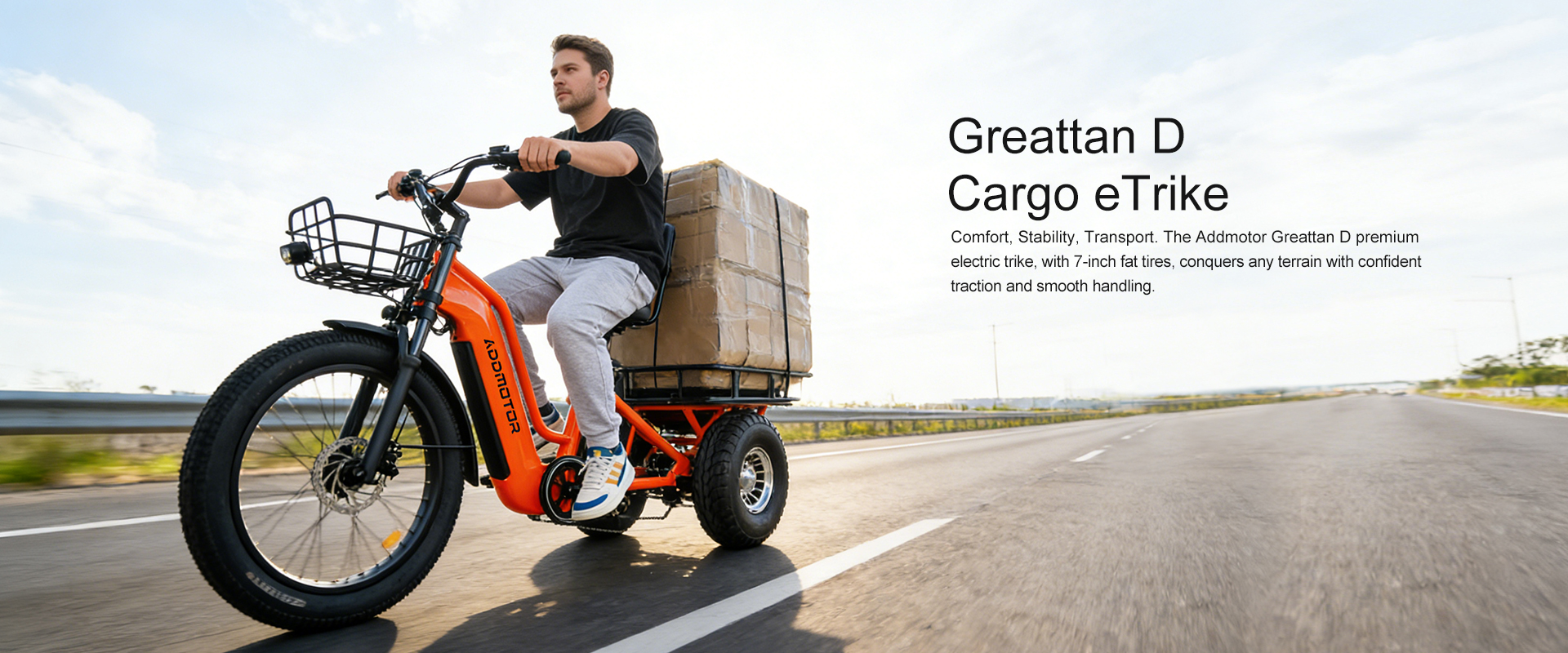
Electric cargo tricycles have rapidly become one of the most transformative solutions in modern mobility. As cities grow denser and transportation costs rise, the electric cargo trike offers a rare combination of stability, hauling capability, and zero‑emission performance. Whether used by delivery riders navigating urban congestion, families seeking a safe alternative to cars, or small businesses looking for efficient logistics, the cargo tricycle electric platform delivers unmatched practicality. Its three‑wheel configuration eliminates the balancing challenges of two‑wheel cargo bikes, especially when fully loaded or stopped, making it accessible to riders of all ages and skill levels.
Electric cargo trikes operate using a rear‑mounted hub motor paired with a high‑capacity battery system. This setup provides pedal assist or full electric propulsion, allowing riders to carry heavy loads without physical strain. The inherent stability of a three‑wheel electric cargo bike makes it ideal for stop‑and‑go traffic, uneven terrain, and low‑speed maneuvering. As urban areas worldwide adopt sustainable mobility strategies, electric delivery bikes and electric family bikes have become essential tools for reducing emissions, improving efficiency, and lowering transportation costs.
Advantages Over Two-Wheel Alternatives
The advantages over traditional two‑wheel cargo bicycles are significant. Two‑wheel cargo bikes require constant balancing, especially when carrying children or heavy goods. In contrast, an electric tricycle for cargo applications allows riders to load, unload, and operate safely without worrying about tipping. The wider wheelbase distributes weight evenly, improving comfort and reducing mechanical stress. These benefits have driven rapid adoption among delivery fleets, families, farmers, and commercial operators.
Addmotor Greattan D: Premium Electric Cargo Trike
The Addmotor Greattan D stands out as one of the most advanced adult cargo trikes available today. Designed for users who demand maximum performance, long range, and exceptional durability, it combines a powerful motor system with a reinforced frame and industry‑leading battery capacity.
Greattan D Technical Specifications
| Category | Specification |
|---|---|
| Motor | 750W Rear‑Mounted Brushless Motor |
| Battery | 48V 20Ah Samsung Lithium‑Ion (Dual battery optional) |
| Total Energy Capacity | 960Wh(Single battery) / 1,920Wh(Dual battery) |
| Max Range | Up to 130 miles (PAS 1) |
| Real‑World Range | 120 Miles (Dual-Battery PAS1) |
| Payload Capacity | 350 LBS + 150 LBS |
| Rear Basket Size | 29.5" × 17.3" × 4.1" |
| Tires | 24" X 4.0" F & 19" X 7.0" R |
| Lighting | EB 2.0 LED Headlight & Taillight |
| Sensor | Torque Sensor |
| Differential | Yes |
| Brakes | Hydraulic Disc Brakes |
| Parking Brake | Yes |
| Weight | 148 LBS |
| Frame | Reinforced 6061 Aluminum Alloy Frame |
| Axle | 20% Thicker Rear Axle |
At the core of the Greattan D is a 750W rear‑drive motor that provides smooth, consistent power across varied terrain. Rear‑drive systems offer excellent traction when climbing hills with heavy loads and require less maintenance than mid‑drive motors. Even at maximum payload, the trike maintains strong acceleration and reliable hill‑climbing performance.
Its dual 48V 20Ah Samsung battery system is one of the most advanced in the cargo ebike category. With 1,920Wh of total capacity, riders can achieve up to 120 miles of range in PAS 1, Samsung cells offer superior longevity, temperature stability, and energy density compared to generic battery packs. The dual‑battery setup also provides redundancy, ensuring riders can complete long routes without range anxiety.
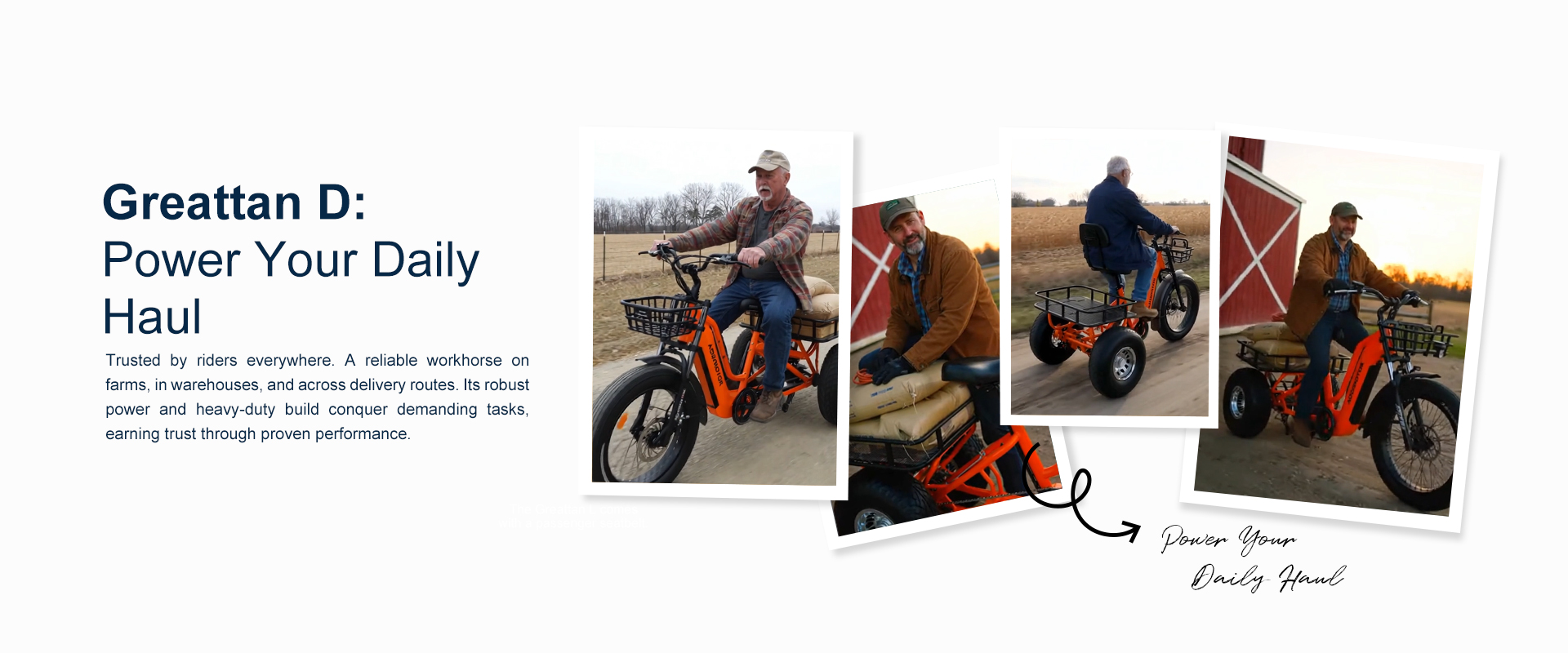
The Greattan D’s 500‑lb payload capacity far exceeds most electric cargo bikes. The oversized rear basket accommodates large grocery loads, tools, equipment, or delivery parcels. A reinforced rear axle and wide stance improve stability when cornering or carrying heavy cargo. The 7‑inch rear fat tires enhance traction, shock absorption, and braking performance on pavement, gravel, dirt, or uneven surfaces.
Safety features include the EB 2.0 lighting system, a torque sensor for smooth power delivery, and a parking brake for secure loading on inclines. Although the trike weighs 148 lbs, this mass contributes to its stability and durability, especially for commercial use.
Real‑World Benefits for Key User Groups
Urban Couriers, Last‑Mile Delivery, Food‑Delivery & Professional Logistics
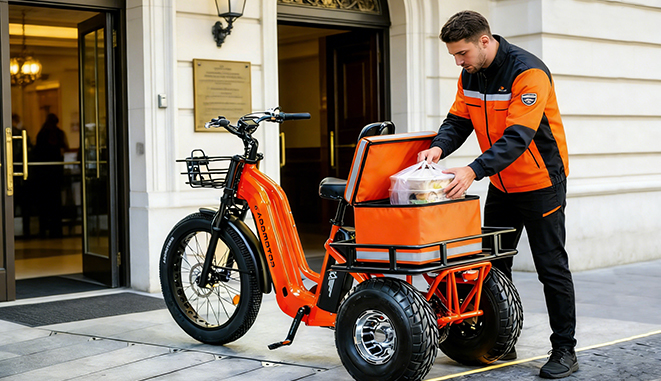
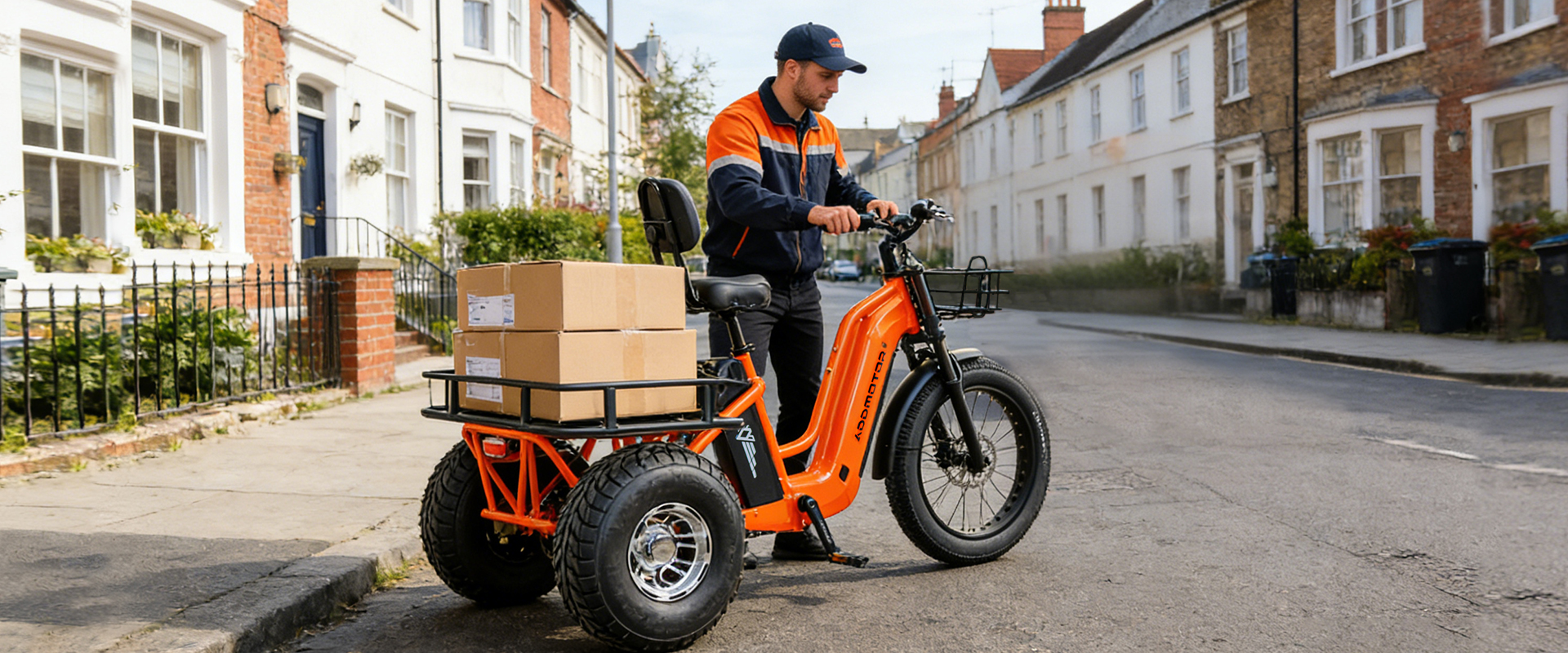
Electric cargo trikes have become one of the most effective tools for modern last‑mile logistics, offering a combination of speed, stability, and zero‑emission performance that traditional delivery vehicles cannot match. In dense urban environments, they navigate congested streets faster than vans, park virtually anywhere, and eliminate the fuel and parking costs that burden conventional fleets.
The Greattan D elevates this capability even further. Its long‑range dual‑battery system eliminates mid‑shift charging, while the 500‑lb payload capacity supports high‑volume parcel loads throughout the day. Delivery riders benefit from the stable three‑wheel platform, which allows rapid loading and unloading without balancing concerns—critical during frequent stop‑and‑go operations. This makes the Greattan D especially valuable for food‑delivery services and courier/express logistics, where fast turnaround, high payload capacity, and all‑day reliability directly impact delivery efficiency and customer satisfaction.
Families, Child Transport & Personal Mobility
Families increasingly adopt electric cargo tricycles as safe, eco‑friendly alternatives to cars. The stable three‑wheel platform eliminates tipping concerns during school runs, grocery trips, and weekend outings. Children ride securely on the rear deck or in child seats, and the torque sensor ensures smooth acceleration with precious cargo aboard. Parents save significantly on fuel and parking costs while enjoying outdoor mobility.
Farmers and Agricultural Operators
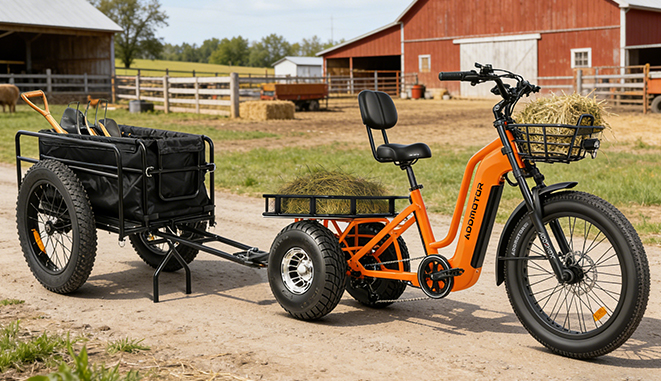
Rural users benefit from the trike’s fat tires, long range, and high payload capacity. Farmers transporting produce to markets appreciate the spacious rear basket and the ability to handle dirt paths and uneven terrain. The three‑wheel design prevents tipping when carrying irregular or delicate agricultural goods. For on‑property logistics, the electric motor eliminates the physical strain of moving tools, feed, or supplies across large areas. Additionally, the Addmotor trailer is fully compatible with the trike, expanding its load‑carrying capability; the electric trike trailer supports up to 220 pounds, making it ideal for heavier agricultural transport needs.
Small Business Owners
Mobile vendors, maintenance contractors, and service professionals rely on cargo ebikes for cost‑effective operations. Landscapers transport tools, pet groomers carry equipment, and market vendors load entire booth setups onto the cargo deck. The trike’s professional appearance and reliability enhance business image while reducing operating costs compared to vans or trucks.
Hotels, Commercial and Institutional Use
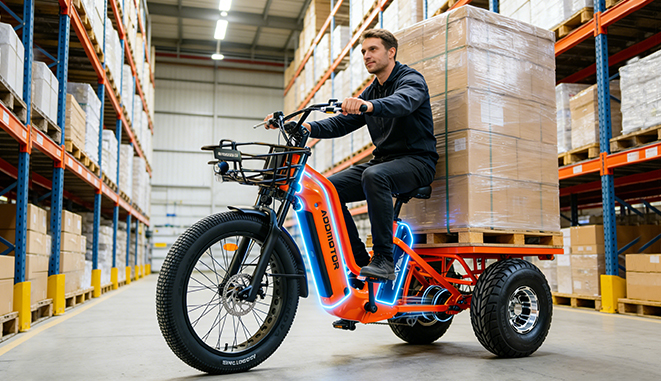
Farmers’ market vendors, mobile food operators, maintenance crews, and campus logistics teams all benefit from the trike’s versatility. Universities and corporate campuses use electric cargo trikes for mail delivery, maintenance, and security patrol. Hotels and other commercial operators also rely on electric trikes for guest services, housekeeping logistics, and efficient on‑property transport, making them a practical solution across a wide range of business environments.
Outdoor and Recreational Use
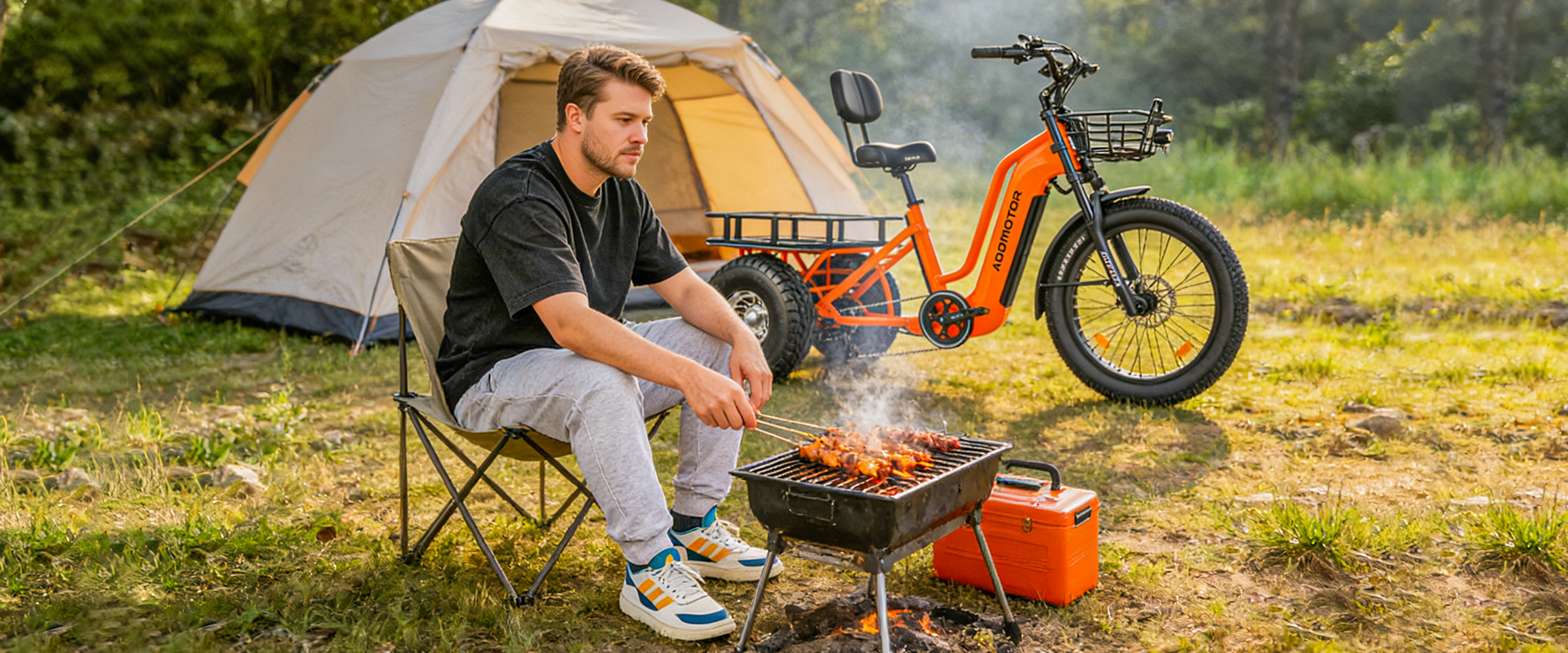
Adventure cyclists use cargo trikes for camping, fishing, hunting, and long‑distance touring. The fat tires handle sand, gravel, and dirt, while the long range supports full‑day excursions. The quiet motor preserves natural environments and avoids disturbing wildlife.
Comparison to Competing Options
Compared to traditional cargo bikes, the electric cargo trike offers unmatched stability and higher payload capacity. Two‑wheel cargo bikes are lighter and more agile but require balancing skill, especially when loaded. Budget trikes using older 18650 batteries lack the range, lifespan, and cold‑weather performance of the Greattan D’s Samsung cells. Even high‑end two‑wheel electric cargo bikes cannot match the trike’s stability when carrying children or heavy loads.
Pros and Cons of Electric Cargo Trikes
Advantages
Electric cargo trikes offer unmatched stability, high payload capacity, extended range, low maintenance, and reduced physical strain. They operate silently, produce zero emissions, and serve multiple use cases—from grocery hauling to commercial delivery. Their ability to tow trailers further expands versatility.
Limitations
High‑quality cargo trikes cost more upfront, and the larger footprint requires more storage space.
Balanced Comparison with Other Transport Modes
Compared to cars, cargo trikes cost far less to operate and often provide faster door‑to‑door travel for short trips. Traditional bicycles lack the capacity and electric assist needed for heavy loads. Two‑wheel cargo ebikes offer agility but require balancing skill. Motorcycles and scooters provide speed but require licensing, fuel, and maintenance while offering limited cargo capacity.
Buyer’s Guide: Choosing Your Electric Cargo Trike
Selecting the right electric cargo trike requires evaluating range, payload, terrain, motor power, frame construction, accessory compatibility, and budget.
- Delivery Riders: Prioritize long range and high payload capacity.
- Families: Need stability, safety features, and child‑seat compatibility.
- Commercial Operators: Choose models with reinforced frames and trailer capability.
- Rural Users: Benefit from fat tires and dual‑battery systems.
Budget considerations range from entry‑level models to premium trikes like the Greattan D, which offers maximum capability and long‑term durability.
Recommended Electric Cargo Bikes: Addmotor GRAOOPRO & Garootan M‑81
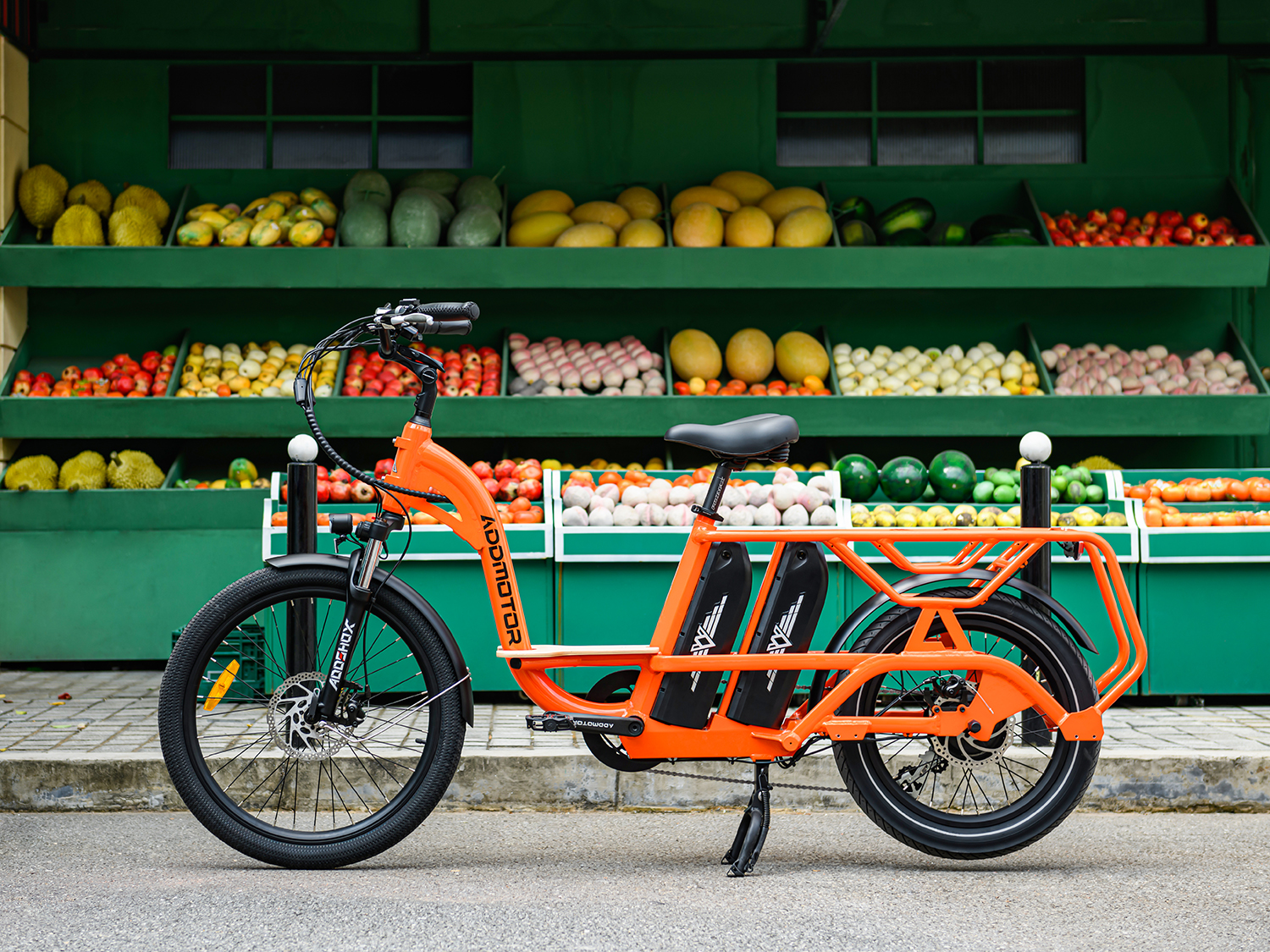
When evaluating real‑world electric cargo bike options, two models stand out for their performance, versatility, and value: the Addmotor GRAOOPRO and the Addmotor Garootan M‑81. Both are purpose‑built for family transport, commercial delivery, and daily utility riding, yet each offers unique strengths that suit different rider needs.Addmotor GRAOOPRO — Best for Heavy Loads & Long‑Range Utility The GRAOOPRO is engineered for riders who demand maximum hauling capability and extended range. Its dual‑battery system delivers exceptional mileage, making it ideal for delivery riders, rural users, and anyone who needs all‑day performance without frequent charging. A reinforced frame, expanded rear rack, and powerful 750W motor allow it to handle heavy cargo, groceries, tools, or multiple passengers with ease.
If your priority is payload, endurance, and terrain versatility, the GRAOOPRO is one of the strongest choices in the cargo e‑bike category.
Addmotor Garootan M‑81 — Best for Families & Urban Transport
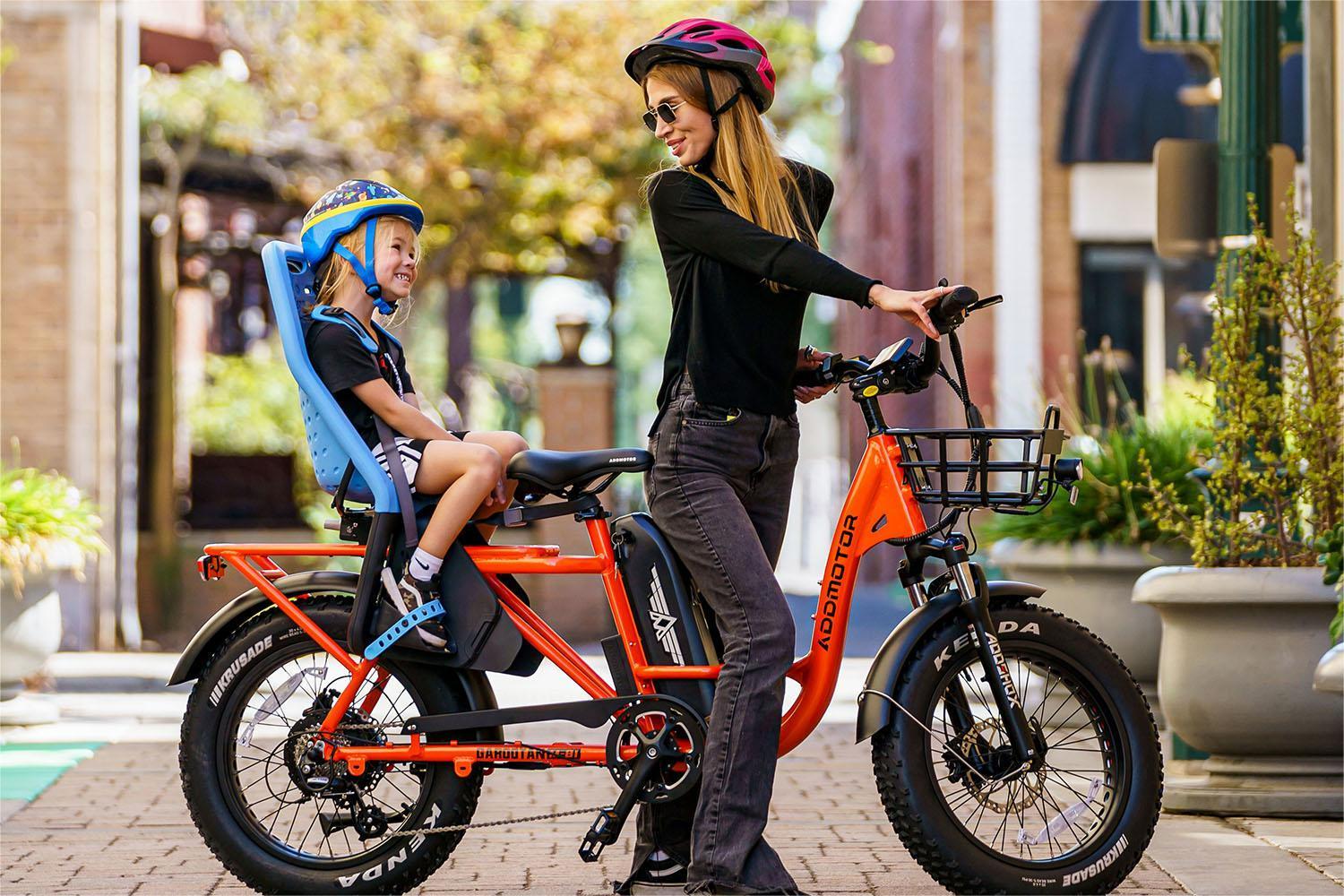
The Garootan M‑81 is a long‑tail cargo e‑bike designed for family transport, school runs, and city errands. Its step‑through frame improves accessibility, while the 750W motor and 20Ah Samsung battery provide smooth, reliable power for daily commuting. The integrated rear rack supports child seats, panniers, or delivery boxes, making it a flexible solution for both family and commercial use.For riders who want a comfortable, stable, and practical cargo bike for urban environments, the M‑81 offers outstanding value and ease of use.
Which One Should You Choose?
Choose GRAOOPRO if you need:- Maximum range
- Higher payload capacity
- Dual‑battery performance
- Rural or mixed‑terrain capability
- Family‑friendly design
- Urban commuting comfort
- Long‑tail versatility
- Child‑seat or passenger compatibility
Conclusion
Electric cargo tricycles are redefining sustainable mobility for families, businesses, and urban logistics. The Addmotor Greattan D exemplifies the highest standard of electric cargo trike engineering with its powerful motor, dual Samsung batteries, 500‑lb payload capacity, and robust construction. Complementing it are Addmotor’s long‑tail cargo ebikes—the GRAOOPRO and Garootan M‑81—which expand utility options for riders who prefer two‑wheel cargo platforms with high stability, strong payload capability, and extended range. As cities embrace zero‑emission transportation and families seek alternatives to cars, electric cargo trikes and cargo ebikes will continue shaping the future of short‑distance travel. For delivery professionals, small business owners, farmers, and modern families, investing in a high‑quality electric cargo trike or cargo ebike transforms everyday transportation challenges into opportunities for efficient, economical, and enjoyable mobility.