Electric Cargo Bikes for Family & Commercial Use: Addmotor GRAOOPRO & Garootan M-81
Abstract
Electric cargo bikes have rapidly evolved from niche utility vehicles into mainstream transportation tools for families, commuters, and commercial operators. By blending agility, power, and practicality, models like the Addmotor GRAOOPRO and Garootan M-81 offer a professional-grade alternative to cars, especially in congested urban environments.
Contents
- Introduction: The Evolving World of Electric Cargo Bikes
- Addmotor GRAOOPRO Electric Cargo Bike & Specs
- Addmotor Garootan M-81 Cargo E‑Bike & Specs
- How Cargo E‑Bikes Complement Cargo Trikes
- Real-World Applications of Cargo E‑Bikes
- Why Cargo E‑Bikes Are Growing Rapidly
- Choosing Between the GRAOOPRO and M‑81
- Technical Analysis
- Conclusion: Shaping the Future of Urban Mobility
Introduction: The evolving world of electric cargo bikes
Electric cargo bikes have rapidly evolved from niche utility vehicles into mainstream transportation tools for families, commuters, and commercial operators. As cities become more congested and the cost of car ownership continues to rise, the electric cargo bike offers a compelling alternative—one that blends agility, power, and practicality in a way few other vehicles can match. Unlike electric cargo trikes, which prioritize maximum stability and payload capacity, two‑wheel cargo ebikes deliver a more dynamic riding experience, narrower width, and faster maneuverability. For riders who need speed, efficiency, and the ability to navigate tight urban spaces, the electric cargo bike is often the superior choice.
Addmotor’s GRAOOPRO and Garootan M‑81 represent two of the most capable cargo e‑bikes available today. Each model is engineered for different user needs, but both share Addmotor’s commitment to durability, long‑range performance, and real‑world utility. Whether you’re a delivery rider completing dozens of stops per day, a parent transporting children, or a small business owner moving equipment, these two cargo e‑bikes offer professional‑grade performance at accessible price points.
Addmotor GRAOOPRO Electric Cargo Bike
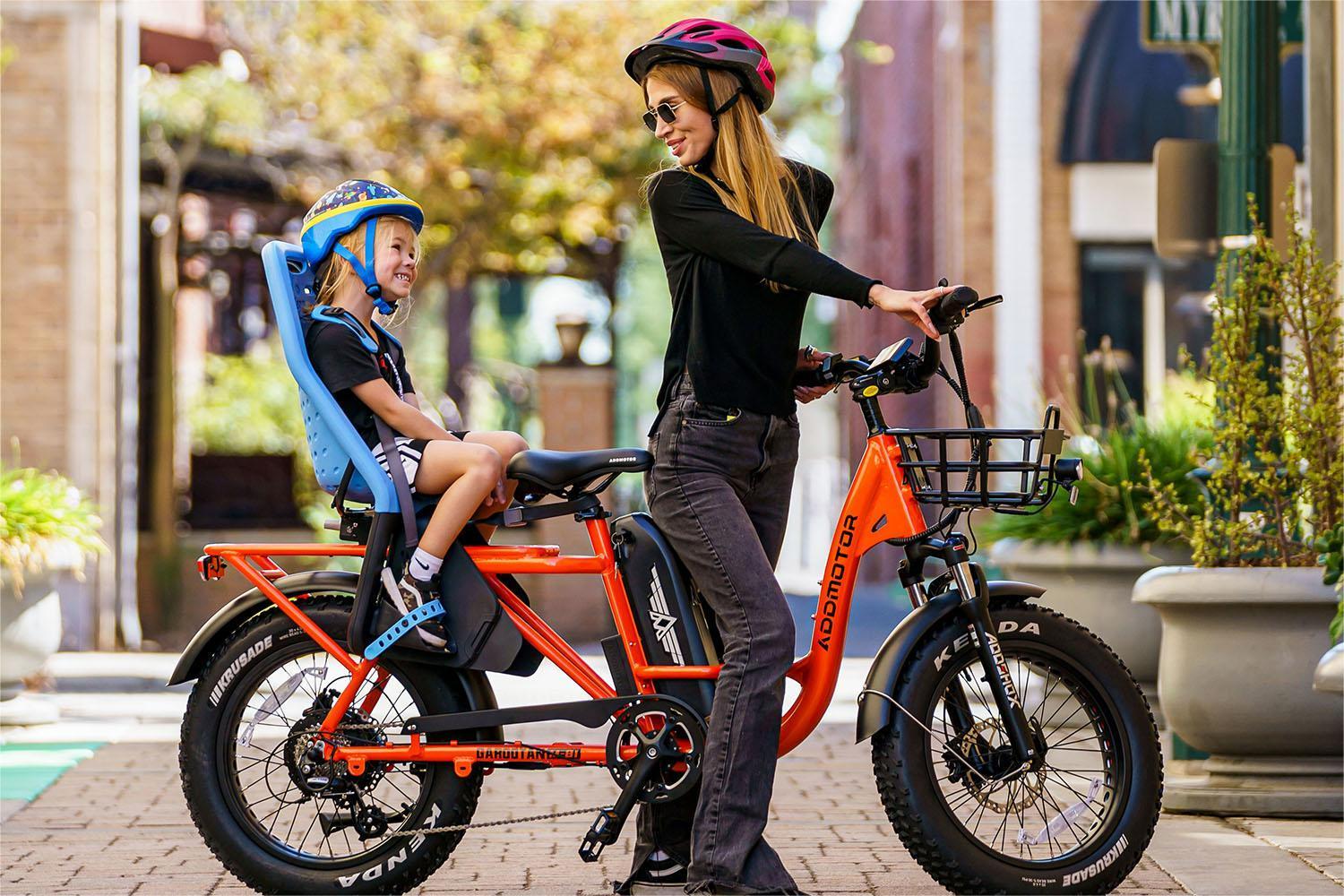
The GRAOOPRO is a longtail cargo ebike built for riders who demand maximum range, high payload capacity, and exceptional versatility. Its extended rear frame provides a stable platform for carrying children, groceries, tools, or delivery cargo. With optional dual‑battery capability and a reinforced aluminum frame, the GRAOOPRO family ebike is engineered for heavy‑duty daily use.
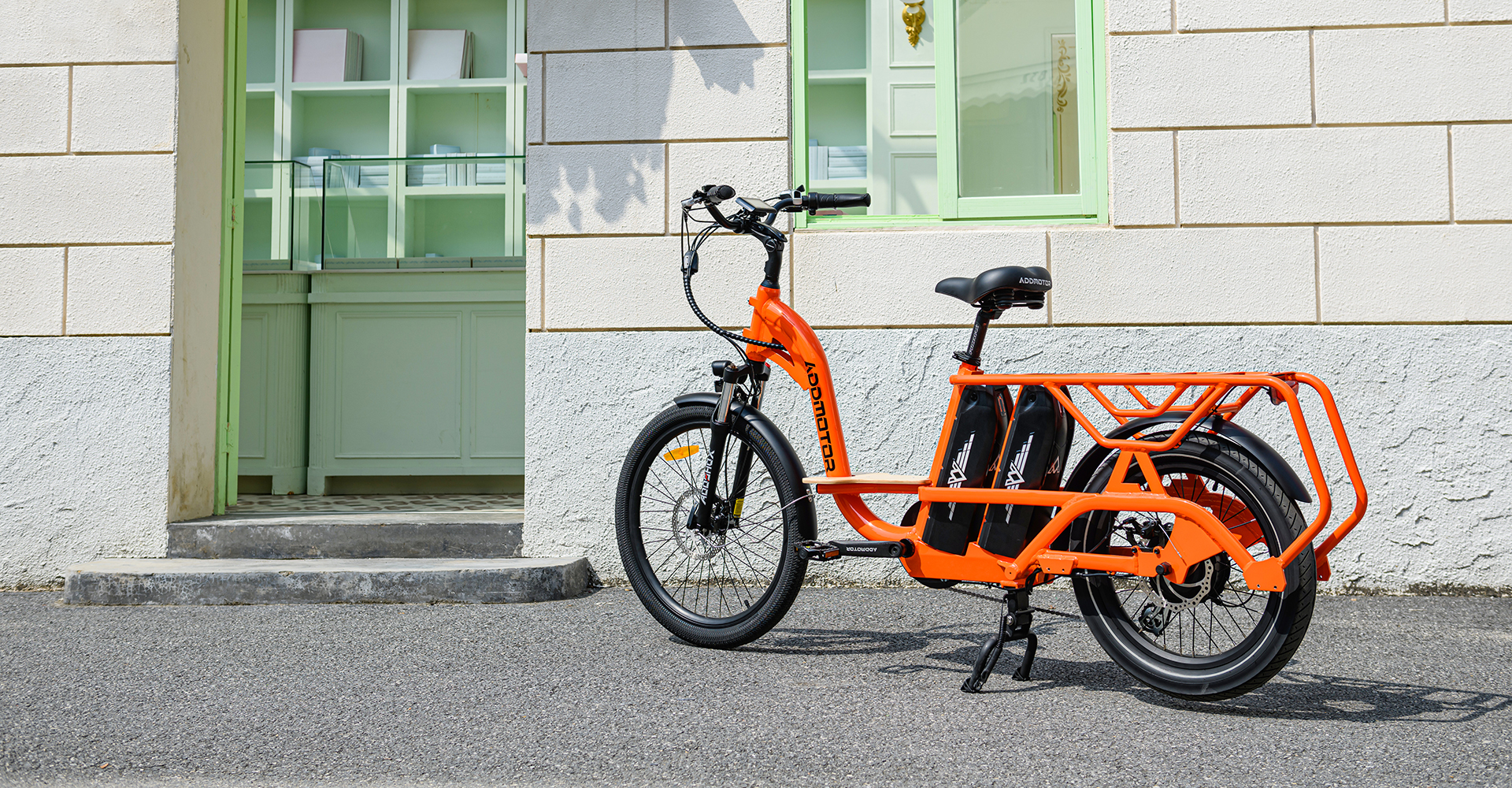
GRAOOPRO Technical Specifications
| Category | Specification |
|---|---|
| Motor | 750W Rear‑Mounted Brushless Motor |
| Battery | Dual 48V 20Ah Samsung Lithium‑Ion (optional) |
| Total Energy Capacity | Single battery: 960Wh / Dual battery: 1920Wh |
| Max Range | Up to 210 miles (PAS 1, dual battery) |
| Payload Capacity | 450 lbs |
| Frame Type | Reinforced Longtail Aluminum Alloy |
| Tire Size | 20" × 3" Urban Tires |
| Sensor | Torque Sensor |
| Brakes | Mechanical Disc Brake |
| Weight | 72 LBS |
| Rear Deck | Extended Longtail Cargo Platform |
The GRAOOPRO electric utility bike 750W motor delivers strong acceleration and reliable hill‑climbing performance, even when fully loaded. Its optional dual‑battery system offers one of the longest ranges in the cargo e‑bike category—up to 210 miles in PAS 1(dual battery)—making it ideal for long‑distance commuters, delivery riders, and families who need all‑day capability.
The longtail frame distributes weight evenly, improving stability while maintaining the agility of a two‑wheel bicycle. Riders can configure the rear deck with child seats, panniers, cargo boxes, or modular racks, making the GRAOOPRO adaptable to a wide range of applications. Hydraulic disc brakes ensure confident stopping power, and the torque sensor provides smooth, intuitive pedal assistance.
Beyond its technical strengths, the GRAOOPRO cargo bicycle excels in real‑world usability. The extended wheelbase enhances stability when carrying children or heavy cargo, while the low center of gravity improves handling at slow speeds. The electric delivery bike geometry is designed to feel natural even for riders transitioning from standard bicycles, making this electric family bike accessible to a wide range of users.
Addmotor Garootan M-81 Cargo E‑Bike
The Garootan M‑81 is a compact, affordable cargo e‑bike designed for riders who want utility without the size or cost of a longtail model. This electric cargo bike for sale offers a powerful motor, generous payload capacity, and a step‑through frame that accommodates riders of all heights. For commuters, delivery riders on shorter routes, and families with lighter cargo needs, the Garootan M‑81 ebike cargo bike delivers exceptional value.
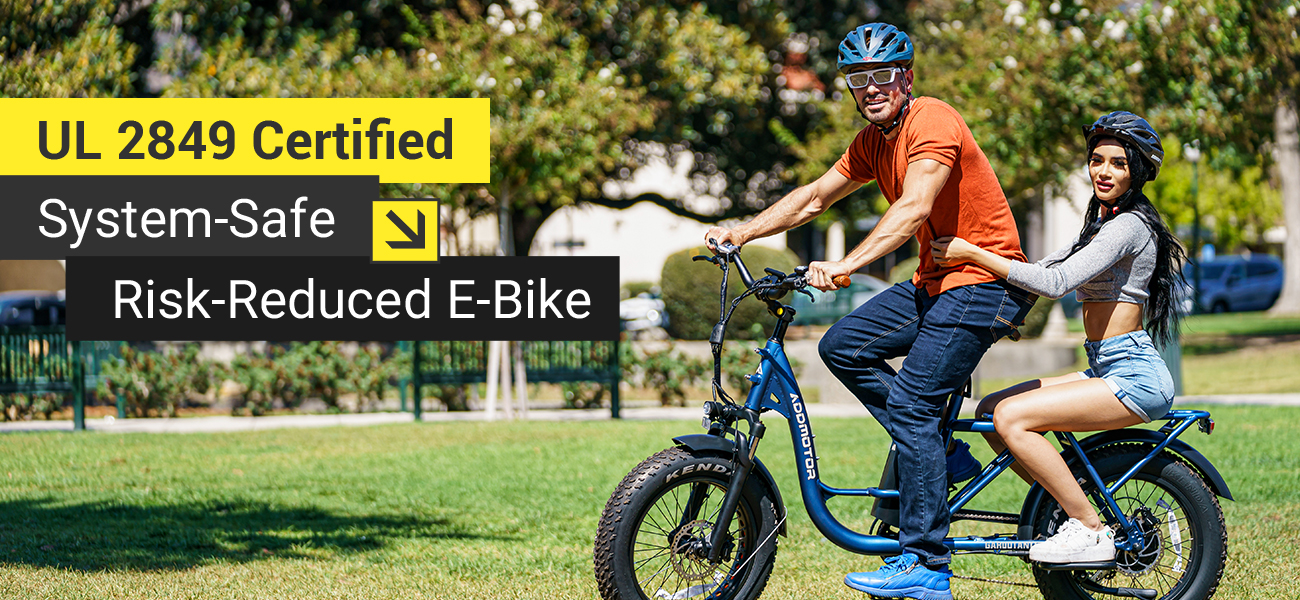
Garootan M‑81 Technical Specifications
| Category | Specification |
|---|---|
| Motor | 750W Rear‑Mounted Brushless Motor |
| Battery | 48V 20Ah Samsung Lithium‑Ion |
| Total Energy Capacity | 960Wh |
| Max Range | Up to 105 miles (PAS 1) |
| Payload Capacity | 400 lbs |
| Frame Type | Step‑Through Aluminum Alloy |
| Tire Size | 20" × 4" Fat Tires |
| Sensor | Speed Sensor |
| Brakes | Hydraulic Disc Brakes |
| Weight | 85 LBS |
| Rear Rack | Integrated Cargo Rack |
The M‑81 electric cargo bicycle fat tires provide excellent traction and shock absorption, making it suitable for pavement, gravel, and mixed terrain. Its 105‑mile maximum range supports daily commuting, while the 400‑lb payload capacity accommodates groceries, child seats, or delivery cargo. The step‑through frame enhances accessibility, making this electric cargo tricycle easy to mount and dismount even when carrying cargo.
The M‑81’s compact footprint makes it ideal for riders who live in apartments or have limited storage space. This fat tire cargo bike add stability without sacrificing maneuverability, and the torque sensor ensures smooth, predictable power delivery. For riders who want a capable cargo e‑bike without the size of a longtail, the M‑81 family cargo ebike is a standout choice.
How Cargo E‑Bikes Complement Cargo Trikes?
Cargo e‑bikes and cargo trikes serve different but complementary roles. While trikes excel in stability and maximum payload capacity, two‑wheel cargo bikes offer agility, speed, and narrower profiles ideal for dense urban environments.
Cargo e‑bikes are particularly advantageous when:
- Navigating narrow bike lanes or tight alleyways
- Prioritizing speed and maneuverability
- Storing the bike in small apartments or limited indoor spaces
- Carrying moderate loads rather than maximum‑capacity cargo
- Riding longer distances where reduced rolling resistance improves efficiency
Many families and businesses choose to operate both platforms. Cargo trikes handle bulk deliveries and heavy loads, while cargo e‑bikes serve faster, lighter‑duty routes. Delivery fleets often deploy trikes for large parcel batches and e‑bikes for rapid‑response deliveries in congested areas.
Real-World Applications of Cargo E‑Bikes
Urban Delivery and Courier Services
Cargo electric bikes have become indispensable for last‑mile delivery. Their narrow width allows riders to bypass traffic, use bike lanes, and park directly at delivery points. The GRAOOPRO’s long range and high payload capacity make this family cargo bike electric ideal for full‑day courier operations, while the Garootan M‑81 suits shorter routes and lighter loads. Food delivery platforms benefit from the bikes’ ability to maintain temperature in insulated boxes and complete more stops per hour than car‑based delivery vehicles.
Family Transportation
Families use cargo e‑bikes for school runs, grocery trips, and recreational outings. The GRAOOPRO’s longtail frame supports multiple child seats, while the Garootan M‑81 electric assist cargo bike offers a compact option for families with one child or lighter cargo needs. Both models provide smooth torque‑assisted acceleration, making hills and long distances manageable even with passengers aboard.

Small Business and Commercial Use
Mobile vendors, maintenance crews, and small business owners rely on cargo e‑bikes for cost‑effective operations. The GRAOOPRO’s extended deck accommodates tools, equipment, and merchandise, while the M‑81’s compact size excels in tight service areas. Businesses benefit from reduced operating costs, zero emissions, and the ability to access pedestrian‑only zones.
Campus and Institutional Operations
Universities, corporate campuses, and resort properties use cargo e‑bikes for internal logistics. Mail delivery, maintenance tasks, housekeeping, and security patrols are all streamlined with electric cargo bikes. The GRAOOPRO’s range and capacity support full‑day operations, while the M‑81’s compact size excels in tight campus environments.
Recreational and Outdoor Use
Cargo e‑bikes also serve recreational riders. The GRAOOPRO’s long range supports touring and long‑distance rides, while the M‑81’s fat tires handle sand, gravel, and mixed terrain. Riders use them for camping, fishing, and weekend adventures, carrying gear that would be impractical on a standard bicycle.
Why Cargo E‑Bikes Are Growing Rapidly?
The rapid adoption of cargo e‑bikes is driven by several macro‑level trends:
- Urbanization and Traffic Congestion: Cities are becoming more crowded, and cars are becoming less practical for short trips. Cargo e‑bikes offer faster door‑to‑door travel in dense areas.
- Rising Transportation Costs: Fuel, insurance, parking, and vehicle maintenance continue to rise. Cargo e‑bikes eliminate most of these expenses.
- Environmental Responsibility: Zero‑emission mobility is becoming a priority for families and businesses. Cargo e‑bikes reduce carbon footprints without sacrificing convenience.
- Versatility Across Use Cases: From deliveries to family transport to commercial operations, cargo e‑bikes adapt to nearly any scenario.
- Health and Lifestyle Benefits: Riders enjoy fresh air, light exercise, and reduced stress compared to driving in traffic.
- Accessibility for a Wider Range of Riders: Step‑through frames, torque sensors, and adjustable components make cargo e‑bikes accessible to riders of varying ages, fitness levels, and physical abilities.
- Lower Barriers to Ownership: Compared to cars, cargo electric bikes require no licensing, no insurance, and minimal maintenance—making them financially accessible to more households and businesses.
Choosing Between the GRAOOPRO and Garootan M‑81
The GRAOOPRO is ideal for long‑distance delivery riders, families with multiple children, businesses that require maximum cargo space, riders who need dual‑battery endurance, and anyone who depends on a heavy‑duty platform for daily use.
The Garootan M‑81 is ideal for budget‑conscious riders, short‑to‑medium‑distance commuters, families with lighter cargo needs, riders who prefer a compact and accessible frame, and those who frequently ride across mixed terrain for recreation.
Both models deliver professional‑grade performance, but each excels in different scenarios depending on range requirements, cargo volume, terrain, and rider preference.
Technical Analysis: Engineering Differences That Define Cargo E‑Bike Performance
Electric cargo bikes may look straightforward at first glance, but their real‑world performance is shaped by a series of engineering decisions that directly influence power, stability, efficiency, and long‑term durability. Understanding these factors helps riders choose the right model for their needs and explains why the GRAOOPRO and M‑81 consistently outperform many competitors in the cargo e‑bike category.
Motor Architecture and Torque Delivery
Both the GRAOOPRO and M‑81 rely on a 750W rear‑mounted brushless hub motor, but the real advantage comes from how these motors deliver torque under load. Rear‑hub motors provide immediate, direct power without stressing the drivetrain, which helps maintain smooth performance even when the bike is fully loaded. Paired with a torque sensor that reads pedal pressure in real time and adjusts assistance accordingly, both models offer a natural, intuitive riding feel. There’s no abrupt surge or lag—just steady, predictable acceleration that makes hill climbs easier and keeps the bike stable when carrying children or heavy cargo.
Battery Chemistry, Energy Density, and Thermal Stability
Addmotor’s use of Samsung lithium‑ion cells gives both models a clear edge in energy density, temperature control, and long‑term reliability. These cells hold voltage more consistently under load, resist heat buildup during long rides, and last significantly longer than generic battery packs. In the GRAOOPRO’s dual‑battery setup, the system draws power evenly from both packs, reducing thermal stress and keeping voltage stable even during demanding use. This thoughtful engineering is a major reason the GRAOOPRO achieves its impressive 210‑mile maximum range.
Frame Geometry and Load Distribution
Cargo e‑bikes must carry substantial weight without compromising handling, and Addmotor addresses this through carefully considered frame geometry. The GRAOOPRO’s longtail design extends the wheelbase and lowers the center of gravity, which improves straight‑line stability and minimizes sway when transporting children or heavy loads. The Garootan M‑81 step-through frame focuses on accessibility while using a reinforced downtube to prevent flex under pressure. Both frames are built from 6061 aluminum alloy, chosen for its strength, corrosion resistance, and predictable flex characteristics.
Tire Engineering and Terrain Adaptability
Tires play a major role in how a cargo e‑bike feels on the road. The GRAOOPRO’s 20" × 3" urban tires are designed for efficiency and smooth pavement performance, offering predictable cornering and lower rolling resistance. The Addmotor M‑81’s 20" × 4" fat tires provide excellent traction and shock absorption across mixed terrain, reducing rider fatigue and making it ideal for riders who frequently transition between pavement, gravel, and uneven surfaces.
Braking System Performance Under Load
Because cargo e‑bikes often carry 300–450 lbs of combined rider and cargo weight, braking performance is critical. Both models use hydraulic disc brakes, which offer stronger, more consistent stopping power and better modulation than mechanical systems. This level of control enhances safety for both family and commercial use, especially during emergency stops or wet‑weather riding.
Electrical System Integration and Safety
Addmotor’s EB 2.0 electrical system incorporates multiple layers of protection, including safeguards against over‑current, over‑voltage, and overheating, along with short‑circuit protection and waterproof connectors. This robust electrical architecture ensures reliable operation in rain, cold weather, and high‑load conditions—essential for riders who depend on their bikes for work or daily transportation.
Real‑World Efficiency and Power Management
The combination of torque‑sensor technology, Samsung battery cells, and optimized frame geometry results in higher real‑world efficiency than many competing cargo e‑bikes. Riders get more miles per watt‑hour because the motor only delivers power when needed, the frame minimizes energy loss through flex, and the battery maintains stable voltage under load.Long‑Term Ownership Cost and Battery Lifecycle
Cargo e‑bikes significantly reduce transportation costs compared to cars or gas‑powered scooters. With annual operating expenses typically between $300 and $600, these long tail electric cargo bike offer a cost‑effective alternative for families and businesses. Samsung battery cells last between 800 and 1,200 charge cycles—equivalent to four to seven years of regular use—making these cargo bicycle for sale a reliable long‑term investment.
Upgrade Potential and Future‑Proof Design
Both the GRAOOPRO and Garootan M‑81 are built with modularity in mind, supporting a wide range of accessories such as child seats, cargo boxes, panniers, trailer hitches, and upgraded lighting systems. This flexibility allows riders to adapt their bikes as their needs evolve, ensuring long‑term practicality and value.Conclusion
Electric cargo bikes offer a practical, efficient, and sustainable way to move through modern cities, and the Addmotor GRAOOPRO and Garootan M‑81 highlight just how versatile this category has become. The GRAOOPRO delivers exceptional range and load capacity for families and commercial riders who need all‑day performance, while the Garootan M‑81 provides a compact, accessible option for everyday commuting and lighter cargo needs.
Both models combine thoughtful design with reliable engineering, giving riders a smart alternative to cars and gas‑powered vehicles. As more people look for cleaner, more flexible transportation, electric cargo bikes like these will continue shaping the future of urban mobility.