The Ultimate Spring E-Trike Maintenance Checklist: Keep Your Addmotor Running Like New
Spring is the season of fresh starts — and your electric trike deserves one too.
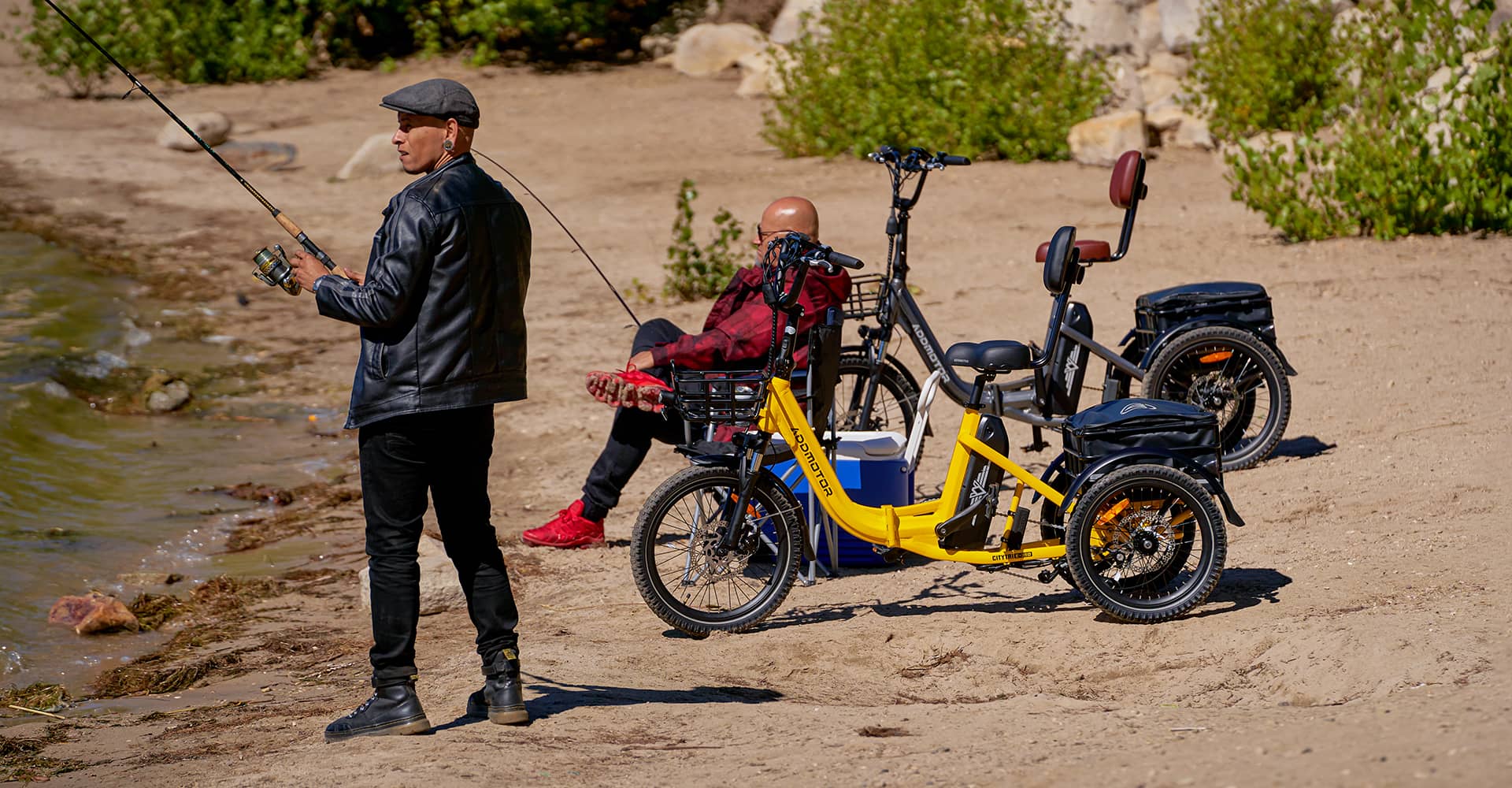
After a winter of cold temperatures, short days, and stored-away weekends, your Addmotor e-trike is ready for its first proper tune-up of the year. Whether you ride an Citytri E-310 folding electric trike or an Citytan M-315 fat tire folding electric trike, a thorough spring maintenance routine will keep you rolling safely, reliably, and at performance through every mile ahead.
Why Spring Maintenance Matters More Than You Think
Winter is tough on electric trikes. Cold temperatures reduce battery efficiency. Road salt accelerates corrosion. Inconsistent charging during storage can cause imbalances. And if your trike sat idle for weeks, rubber seals can dry out and lubricants can settle. A proper spring check catches small problems before they become expensive repairs. Think of it as an annual physical for your e-trike — a few minutes of attention now can add hundreds of miles to your trike's lifespan.
Pre-Ride Inspection: Start Here Every Time
Before every ride — but especially after winter — run through this quick pre-ride checklist:
- Tire pressure: Check and inflate to the PSI listed on the tire sidewall. Cold tires lose ~1 PSI per 10°F drop. Inflate before your first spring ride.
- Tire tread and sidewalls: Look for cracks, bulges, or embedded glass. Replace if the tread is worn below 2/32 inch.
- Brake function: Squeeze both brakes — they should engage firmly within 1/4 inch of lever pull. If they feel spongy, bleeding is needed.
- Lights and signals: Test front/rear LED lights, brake light, and turn signals if equipped.
- Bell or horn: Make sure it's securely mounted and audible.
- Quick-release levers: Confirm all quick-release hubs are properly tensioned.

Step 1: Battery Care — The Heart of Your E-Trike
Your Citytri E-310 and Citytan M-315 both use a UL-Certified 48V 20Ah Samsung lithium battery. Treat it right and it will deliver 85+ miles per charge for years.
Inspect the battery case:
Remove the battery from its mount and inspect the casing for cracks, deep scratches, or moisture ingress. If the casing is damaged, contact Addmotor support immediately — never ride with a damaged battery.
Clean the battery contacts:
Use a dry or slightly damp cloth to wipe the metal terminals on both the battery and the mounting interface. Corrosion buildup increases resistance and reduces efficiency. A cotton swab with isopropyl alcohol works well for stubborn grime.
Check the charge port:
Inspect the charging port for debris, bent pins, or moisture. Blow it out gently with compressed air. Never charge a wet battery or a port that shows moisture.
Winter storage charging habits — what to do now:
If you stored your battery at low charge all winter, it has likely experienced深度放电 (deep discharge) stress. Run two to three full charge cycles (charge to 100%, ride, discharge to ~20%, repeat) to help rebalance the cells.
Spring charging best practices:
- Charge at room temperature (65–75°F / 18–24°C) for fastest and most complete charging.
- Avoid charging immediately after a long ride — let the battery cool for 30 minutes first.
- Unplug once fully charged. Modern lithium batteries do not need to be left plugged in.
- Store at 40–60% charge if you plan not to ride for more than two weeks.
Step 2: Tires — Your Only Contact With the Road
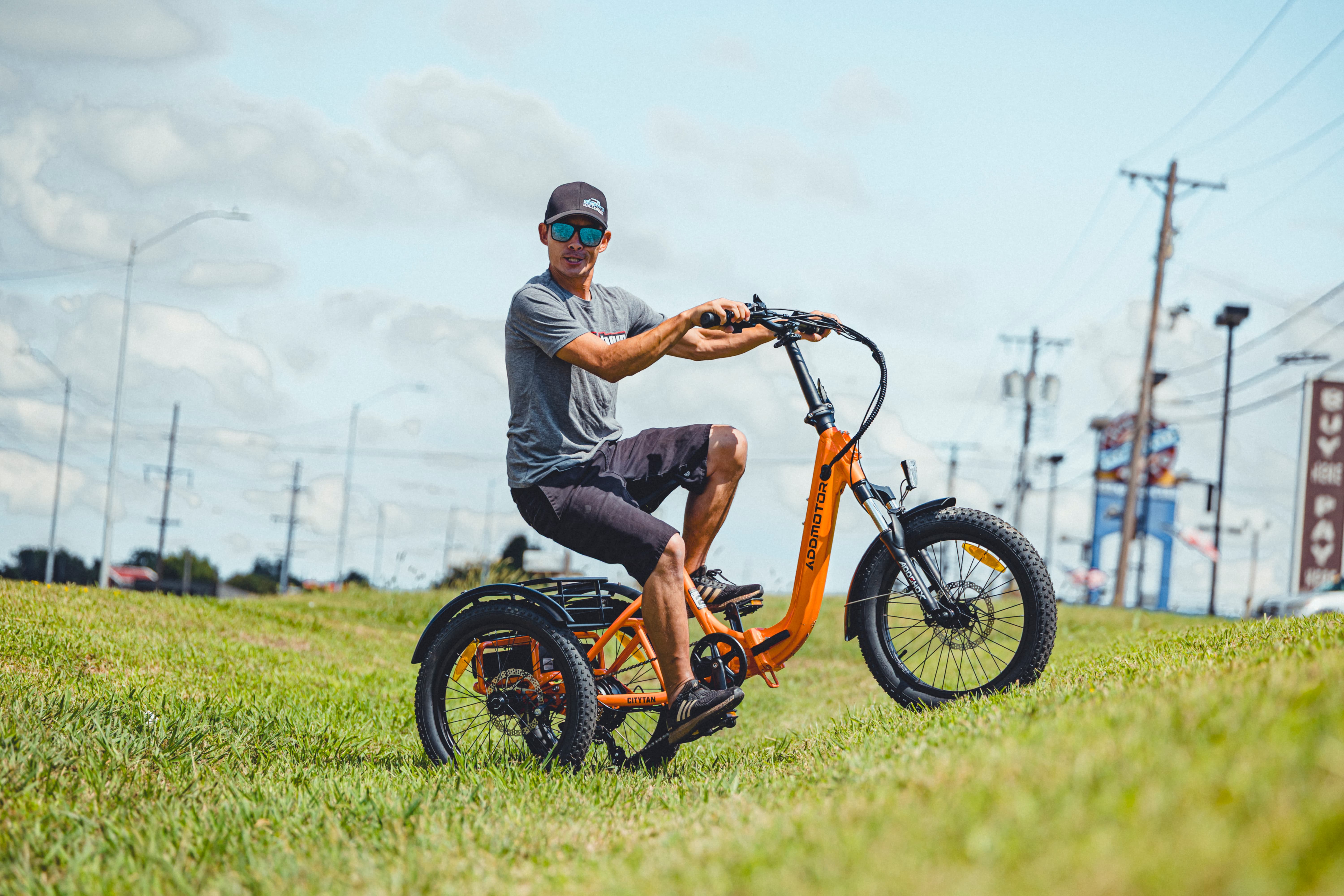
The Citytri E-310 uses standard-width tires ideal for paved roads and neighborhood riding. The Citytan M-315's fat tires (4-inch wide) are designed for sand, snow, gravel, and rough trails.
For Citytri E-310 riders (standard tires):
- Inflate to the recommended PSI (usually 30–40 PSI for city riding). Higher PSI = less rolling resistance on smooth roads.
- Check for sidewall dry-cracking from winter storage. Even small cracks compromise structural integrity.
- Rotate tires front-to-back every 500 miles to even out wear.
For Citytan M-315 riders (fat tires):
- Fat tires typically run at 10–20 PSI. Lower pressure gives better traction on soft terrain.
- Inspect the wider tread face for embedded objects — a flat-head tire tool helps pry out glass and thorns.
- Check that the extra-wide tires are still securely seated in the rim beads after months of storage.
- In spring, consider slightly higher PSI for the first few rides on pavement before deflating for trail adventures.
Step 3: Brakes — Non-Negotiable Safety
Both the Citytri E-310 and Citytan M-315 come equipped with mechanical disc brakes — reliable, powerful, and easy to maintain. Spring is the ideal time for a full brake system inspection.
Inspect brake pads:
Remove the wheel and visually check pad thickness. If pads are worn below 2mm, replace them. Spring roads accumulate a lot of grit — brake pads wear faster in the first few weeks after winter.
Check rotor condition:
The brake rotor should be smooth and free of oil, glazing, and deep grooves. Light scoring is normal and improves wet performance. Heavy grooving means replace the rotor.
Test cable tension and housing:
Squeeze the brake lever. The cable should move smoothly through the housing with no binding. If the lever feels spongy, the cables may need adjustment or bleeding.
Lubrication — do it right:
Use bike-specific lubricant on the brake pivot points and cable ends. Never get lubricant on the rotors or pads. A single drop at each pivot is enough.
Break-in new pads:
If you replaced brake pads, spend 20–30 hard stops from 15 mph in a safe area to bed them in properly.
Step 4: Drivetrain — Chain, Gears, and Motor
The 750W rear hub motor in both the Citytri E-310 and Citytan M-315 is sealed and virtually maintenance-free. Your main focus is the chain and gear system.
Inspect the chain:
A rusty or dry chain dramatically reduces efficiency and accelerates cassette wear. Remove the chain, clean it in degreaser, rinse, dry, and re-lubricate with a quality chain oil. Wipe off excess — a dripping chain attracts grit.
Check chain tension:
An overly loose chain can skip and damage the motor. A too-tight chain accelerates wear on the cassette and chainring. There should be about 1/2 inch of play when you press on the center of the chain.
Inspect the derailleur and shifters (if equipped):
Test gear shifts through the full range. If shifting is sluggish, the derailleur cable likely needs adjustment or lubrication.
Motor connection check:
Locate the motor cable connector near the rear dropout. Inspect for corrosion, looseness, or chafing. Spray lightly with a water-displacing lubricant if you see any oxidation.
Step 5: Frame, Folding Mechanism, and Hardware
The Citytri E-310 and Citytan M-315 are folding trikes — and that folding mechanism deserves extra attention after a winter in storage.
Inspect the folding hinges:
Apply a small amount of lithium grease or silicone lubricant to the main folding hinges on both the main frame and the rear frame. Work the mechanism open and closed several times to distribute the lubricant.
Check all bolts:
Winter vibration can loosen bolts. Go through the entire trike with a wrench and check: seat post bolt, handlebar clamp bolts, motor mounting bolts, axle nuts, and fender mounts. Re-torque to spec — do not over-tighten.
Frame inspection:
Look for any cracks, especially around welds, the battery mount, and the folding hinge area. Any crack — no matter how small — is a safety concern. Contact Addmotor support for a replacement frame if needed.
Protective coating check:
Both trikes have powder-coated frames. Touch up any chips or scratches with automotive clear coat or frame protection tape to prevent rust.
Step 6: Electronics and Display
The Citytri E-310 and Citytan M-315 both feature an LCD display with pedal assist levels, battery gauge, and trip computer.
Test all assist levels:
Turn on the display and cycle through each pedal assist level. Confirm the motor cuts in smoothly at each level without lag or surging.
Check throttle function (if equipped):
Twist or thumb throttle should engage the motor immediately and smoothly. Any delay or stuttering could indicate a loose connector.
Inspect wiring:
Follow the main wiring harness from the battery to the controller to the motor. Look for chafed wires, loose connectors, or exposed cables. Zip-tie any loose wires to prevent them from catching on moving parts.
Water resistance:
Both trikes are water-resistant, but after winter's road salt and moisture, it is wise to spray the controller and connector areas with a water-displacing lubricant as a precaution.
Step 7: Storage Tips for the Off-Season (Before Next Winter)
You have done the spring maintenance — now plan ahead for next winter:
- Store indoors or in a dry garage. Moisture and cold are the two biggest enemies.
- Keep the battery at 40–60% charge during storage. Check it monthly and top up if it drops below 30%.
- Cover the trike with a breathable bike cover to keep dust off while allowing moisture to escape.
- Do not hang the trike by its wheels — use a floor stand or wall mount.
E-Trike Maintenance Schedule at a Glance
| Before every ride: | Quick visual check (tires, brakes, lights). |
| Every 200–300 miles: | Chain cleaning and lubrication, brake pad inspection. |
| Every 1,000 miles: | Full brake adjustment, drivetrain inspection, hardware check. |
| Every spring (or 2,000 miles): | Professional tune-up recommended, full system check. |
Common Spring E-Trike Problems — And How to Fix Them
Problem: Battery seems to drain faster than before. Fix: Run 2–3 full charge cycles to rebalance cells. Check tire pressure — low PSI dramatically reduces range.
Problem: Squeaky brakes. Fix: Clean the rotors with isopropyl alcohol. Check for glazing on brake pads. Apply lubricant to pivot points only.
Problem: Motor hesitation on starts. Fix: Check motor cable connectors for corrosion. Ensure battery is fully charged. Clean and lubricate the chain.
Problem: Unusual rattling noises. Fix: Check all bolts and hardware. Inspect the folding hinge for loose play. Check that the battery is securely locked in place.
Ready to Ride?
A well-maintained e-trike is a joy to ride — smooth, reliable, and ready for whatever the road (or trail) throws at it. Whether you are riding your Citytri E-310 to the farmer's market or your Citytan M-315 down a sandy coastal path, spring is calling.
Put in the work now. The miles will take care of themselves.
Need parts, accessories, or professional service? Visit Addmotor's support center or contact the team for personalized maintenance guidance.
- Shop Addmotor Citytri E-310 Folding Electric Trike: https://addmotor.com/products/citytri
- Shop Addmotor Citytan M-315 Fat Tire Folding Electric Trike: https://addmotor.com/products/citytan
Ride Toward Better Health
Discover the stability and freedom of the Addmotor M-Series today.